

When it comes to cannabis, THC and CBD usually steal the spotlight—but there’s another class of compounds that’s just as important to the overall experience: terpenes. You’ve probably heard the term tossed around in dispensaries, on packaging, or even blunt wrap flavours, but what exactly are terpenes, and why are they such a big deal in the modern cannabis scene?
What Are Terpenes?
Terpenes are aromatic compounds found in a wide variety of plants, not just cannabis. They’re responsible for the distinctive smells and flavours of everything from pine needles to citrus peels. In cannabis, terpenes are produced in the same resin glands that create cannabinoids like THC and CBD. Each strain carries a unique terpene profile, which influences its aroma, taste, and even the effects it produces.
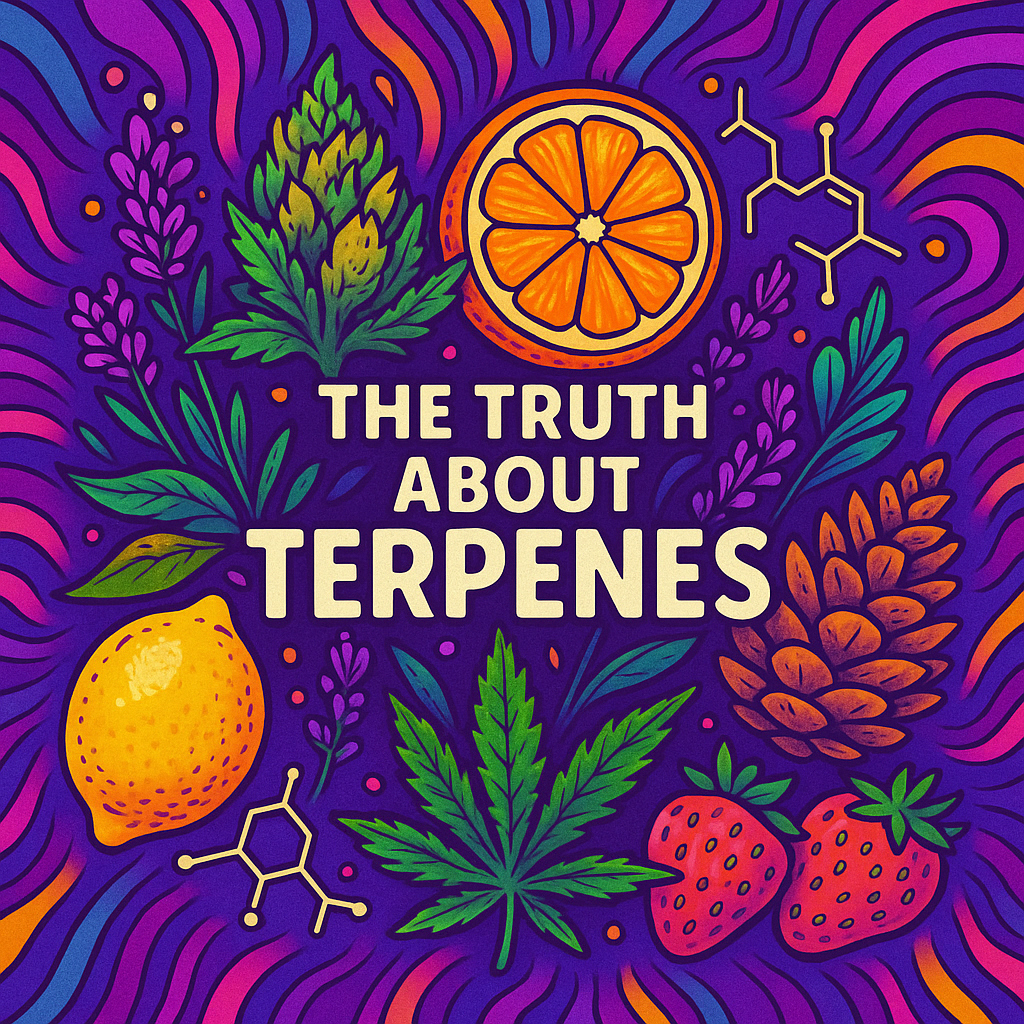
Common cannabis terpenes include:
- Myrcene – Earthy and musky, often associated with relaxing effects.
- Limonene – Bright and citrusy, known for uplifting vibes.
- Caryophyllene – Spicy and peppery, the only terpene known to also interact with cannabinoid receptors.
- Pinene – Sharp, pine-like aroma, often linked to alertness.
A Legacy of Aroma
While terpenes are now a hot topic in the cannabis world, their importance has long been celebrated in other industries. In wine, terpenes contribute to the complex bouquet of aromas—floral notes in a Riesling or citrus hints in a Sauvignon Blanc come from the same types of compounds found in cannabis. In perfume, terpenes are the building blocks of scent, used to craft everything from woody bases to bright, fruity top notes. Even in fine dining, chefs use terpene-rich herbs, spices, and citrus to create memorable flavour experiences. These industries have understood for centuries what cannabis enthusiasts are now rediscovering: terpenes are the essence of flavour and aroma.

Why Terpenes Matter
Terpenes aren’t just about flavour—they play a big role in the entourage effect, a theory suggesting that cannabinoids and terpenes work together to produce a fuller, more balanced high. This means two strains with similar THC levels can feel completely different based on their terpene content. Today’s cannabis consumers are more educated and selective, seeking specific effects, flavors, and aromas. As a result, terpene profiles are now a major factor in strain selection.
Flavouring Terpenes: Not Just for Flower
The influence of terpenes doesn’t stop with bud. They’re now being added to all kinds of smoking accessories—from flavoured blunt wraps and rolling papers to infused filter tips. These added terpenes are usually botanically derived, meaning they’re extracted from non-cannabis plants like lemons, lavender, or cloves. While they don’t replicate the exact profile of a cannabis strain, they do provide consistent, bold flavours that enhance the smoking experience.
Modern flavoring technology has come a long way. Today’s terpene-infused wraps and tips offer elevated, gourmet-level flavours. These tantalizing options appeal not only to flavour-chasers but also to casual users who want a smoother, more enjoyable hit.
It’s important to note, however, that these added terpenes are not cannabis-derived. While safe and flavourful, they don’t contribute to the full entourage effect like terpenes naturally occurring in flower or live resin.
Concentrates and Temperature: Unlocking True Terpene Flavour
Terpenes are volatile compounds, meaning they evaporate at relatively low temperatures. This makes temperature control absolutely essential when dabbing concentrates like live resin, rosin, or shatter.
Enter the cold start dab. Instead of heating your banger until it’s red hot and dropping in your dab, you load the concentrate into a cool banger, then gradually heat it until vaporization starts. This technique helps preserve the delicate terpenes, delivering maximum flavor without scorching them off. The result? Smoother hits and a more pronounced terpene profile.
For those using traditional torches, quality matters. Using high-quality butane and a proper gas torch ensures consistent heat and avoids residue that could affect taste or damage your glass. Cheaper gas options can introduce impurities or odours that interfere with the purity of your dabs.
Preserving Terpene Freshness with Proper Storage
Terpenes are delicate compounds that can degrade quickly when exposed to air, light, heat, or fluctuating humidity. That’s why proper storage is key to maintaining the flavour, aroma, and potency of your cannabis. Glass jars with airtight seals are the gold standard—they protect your bud from oxygen exposure while keeping out excess moisture. To go a step further, many savvy consumers use humidity control packs. These small, food-safe packs regulate moisture inside the jar, maintaining the ideal relative humidity (typically 55-62%) to keep your flower fresh, fluffy, and terpene-rich. A well-stored stash doesn’t just last longer—it tastes and smells better, too.
Final Thoughts
Terpenes are no longer a side note in the cannabis conversation—they’re front and center. Whether you’re picking out a strain, a concentrate, or just a flavored tip for your joint, understanding terpenes can enhance your overall experience. From elevating your high to customizing your flavor profile, terpenes are where science meets style in modern cannabis culture.
Next time you spark up, take a moment to appreciate the flavour, aroma, and effect. Chances are, terpenes are doing more than you think or taste.



Leave A Comment
You must be logged in to post a comment.